OFFER: A BRAND NEW SERIES AND 2 FREEBIES FOR YOU!
Grab my new series, "Guns and Justice in the West", and get 2 FREE novels as a gift! Have a look here!
Chapter One
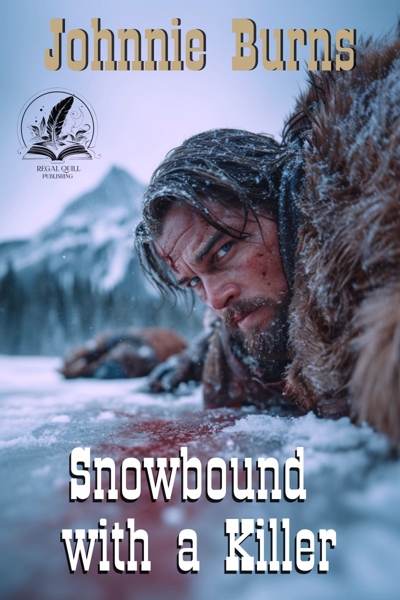
Cold woke him. Not memory, not pain. Cold.
He lay face-down on a riverbank with his cheek pressed against frozen mud and his fingers curled into gravel that had gone to ice. His breath came in thin clouds that the wind tore apart before they rose six inches. The sky above was the color of gunmetal and getting darker. He didn’t know where he was. He didn’t know his own name.
He tried to push himself up and something in his left side came apart like a seam splitting. The sound that left his mouth was not a word. He fell back and lay there with his face in the mud and waited for the pain to tell him what it was.
It was a hole. Something had put a hole in him just beneath his ribs and the blood had frozen there in a stiff dark plate against his shirt. When he pressed his hand to it, the frozen blood cracked and fresh warmth seeped between his fingers.
A bullet wound. He knew that much without knowing how he knew it.
He rolled onto his back. The sky wheeled. Pines lined both banks of the river, their branches sagging under snow that had piled deep enough to bury a man standing upright. The river itself was a flat white sheet of ice that groaned and ticked in the cold. Somewhere upstream a branch snapped under its own frozen weight and the crack of it carried across the silence like a rifle shot.
His hands found a leather satchel pinned beneath his body. The strap had wound around his arm in the fall or the crawl or whatever had brought him there. The leather was crusted with frozen blood—his blood, from the way the stain spread outward from where it had pressed against his side.
He worked the buckle with fingers that had gone clumsy and thick. Inside: a stack of paper, heavy and official. Railroad bonds. He could read the print but the words meant nothing to him. Beneath the bonds, more documents—contracts, letters, names he didn’t recognize. And at the bottom, wrapped in a scrap of oilcloth, a locket.
He opened it. The hinge was stiff with cold but it gave.
A woman looked out at him from one side of the locket. Dark hair parted in the middle and pulled back, a face that was young but not soft. She wasn’t smiling. The photographer had posed her with her chin lifted slightly and her eyes fixed on something past the camera. Beside her, in a separate oval, a child. A boy, maybe four or five, with the same dark hair and a serious expression that sat wrong on a face that young.
He waited for something. A name. A feeling. The ache of recognition. Anything that would connect these two faces to whatever life had existed before the riverbank and the cold and the hole in his side.
Nothing came. He felt the same looking at them as he did looking at the ice or the pines or the darkening sky. They were facts. They were information without meaning. That absence struck him as strange—not grief, not recognition withheld, just nothing where something should have been. He held it for a moment, then closed the locket and put it back.
The blizzard announced itself an hour before it arrived. The wind shifted from the northwest and brought with it a wall of cold that made everything before feel mild. The pines began to sway and creak. Snow that had settled in the branches lifted and scattered in long white streamers across the sky. He watched it from the riverbank where he sat with his back against a fallen log and his hand pressed to his side and understood with a clarity that didn’t require memory: If he stayed there, he would die.
He stood. It took him three tries. The first time his legs folded and he went down on one knee in the snow. The second time he made it upright but the world tilted and he grabbed the log and held on until the trees stopped moving. The third time he got his feet under him and stayed there, swaying, with the satchel clutched against his chest and his jaw locked against the pain.
He walked upstream because the current had to come from somewhere and somewhere meant higher ground and higher ground meant people. That was the logic of it. He didn’t ask himself where the certainty had come from. He noted, briefly, that he probably should have. Whether it was right or wrong didn’t matter. A direction was a direction.
The snow began to fall in earnest within the first quarter mile. Not flurries. Thick curtains of white that cut his vision to twenty feet, then ten, then nothing beyond the next step.
He followed the riverbank because it was the only thing he could follow. The ice groaned beside him. Twice it cracked with a sound like a pistol shot and he flinched each time, which told him something about himself he filed away without understanding.
The cold worked on him in stages. First his fingers, which had never really come back since the riverbank. Then his ears and the tip of his nose. Then his feet, which went from aching to burning to nothing at all. He walked on stumps. The blood at his side had frozen again and the wound had stopped seeping, which he supposed was a kind of luck.
He came to a place where the river narrowed and the ice looked thick enough to hold a man. He needed to cross. He didn’t know why—there was nothing visible on the far side but more pines and more snow—but something in his gut told him the town was over there, if there was a town at all.
He stepped onto the ice.
It held for the first three yards. His boots found traction in the frost and he moved in short careful steps, keeping his weight centered, arms out for balance. Then a crack opened beneath his left boot—not a sound so much as a feeling, the surface shifting under him like something alive.
He froze. The crack ran ahead of him in a jagged line and stopped. He shifted his weight to his right foot and took another step. The ice popped but held. Another step. Another. He was halfway across now and the far bank was a dark smear through the falling snow.
Four steps from the far side, the ice gave under both feet at once.
The sound was like a plate breaking in a quiet room. He dropped to his hands and knees and the water surged up through the fracture—black and fast and so cold it drove the air out of his lungs in a single grunt. It soaked through his trousers to the knee and the shock of it lit up every nerve he had left.
He spread himself flat. The ice shifted and popped beneath his chest. He could feel it flexing, sagging, ready to let go entirely. He crawled. Elbows and knees. The satchel dragged beneath him, catching on the rough surface. Behind him the fracture widened with a sound like tearing cloth and he could hear the river underneath—fast, black, deep enough to swallow a man and not give him back.
At the far bank a pine overhung the water, its roots exposed where the current had eaten away the earth. He lunged for them. His fingers found the root and locked on and he hauled himself up out of the water and onto solid ground and lay there on his back in the snow, shaking, while the river behind him groaned and settled and the hole in the ice filled with dark water that began to freeze again almost immediately.
He got up. He kept walking.
There was a period he couldn’t account for afterward. The snow, the wind, the steady mechanical act of putting one foot ahead of the other. He thought about the woman in the locket once and felt nothing and stopped thinking about her. He thought about dying and found that it didn’t frighten him.
Not because he was brave. Because there was nothing behind him worth holding onto and nothing ahead worth fearing. He was a man without a past walking into a blizzard and the simplicity of it was almost peaceful.
Then the lights appeared.
They came through the snow like sparks—faint, orange, trembling in the wind. He stopped and stared at them. For a moment he thought he had imagined them. Then the wind shifted and the snow thinned and he saw the shapes behind the lights. Buildings. A street. The dark bulk of structures pressed together against the mountain.
A mining town. He could tell from the headframe silhouetted against the snow on the slope above—a wooden tower with a wheel at the top, the kind used to lower men into the earth and haul ore back out. Smoke rose from a dozen chimneys and bent flat in the wind.
The main street was a mud track frozen solid and drifted with snow. A general store with a false front. A saloon with light leaking through shuttered windows. A livery stable. A church steeple, small and crooked, poking up at the far end of town like a finger pointing at nothing.
He counted the buildings because counting them kept him upright. Twelve on the left side of the street. Nine on the right. A two-story structure set back from the road with a wide porch and lamplight glowing behind curtained windows. A boardinghouse, from the look of it.
He aimed for it.
The street was empty. The storm had driven everyone inside and the town sat quiet except for the wind and the faint sound of a piano coming from the saloon two blocks behind him. He passed a water trough frozen solid. A hitching post with no horses. A dog pressed flat against a doorway, watching him with yellow eyes. It didn’t bark. He didn’t blame it. He must have looked like something the river had coughed up and the snow hadn’t finished burying.
The boardinghouse steps were three planks nailed to a frame. He made it up two of them. On the third his legs quit. Not buckled—quit. Like the strings had been cut. He went down on the porch hard enough to rattle the boards and lay there with his face against the wood and the satchel pinned beneath him and thought, with a strange detachment: This is where it ends, then.
The door opened. Light spilled across the porch and across him and for a moment all he could see was the shape of a woman in the doorway, backlit, with a rifle in her hands.
“Lord in heaven,” she said.
He tried to speak. What came out was a sound like gravel scraping stone.
“Don’t try to talk,” she said. She set the rifle against the doorframe and came down to him. Her hands found the blood first. She pulled his coat back and saw the wound and her breath drew in sharp but she didn’t make a sound beyond that.
She got her hands under his arms and tried to drag him and he was too heavy. She braced her boot against the threshold and pulled again and managed maybe six inches before she stopped.
“Bess!” she called into the house. “Get down here. Bring the lamp.”
“What is it?” The second voice was older, frightened, coming from somewhere above.
“Just get down here. Now.”
Footsteps on stairs. A gasp. Then hands on him again—two sets now—and the world lurched as they hauled him through the doorway and across a floor that smelled of pine soap and woodsmoke. He heard the door slam behind them and the wind cut off like a hand had closed over its mouth.
What came next arrived in pieces that didn’t fit together.
Lamplight. Close and warm and wavering. The woman’s face above him—auburn hair pulled back, green eyes narrowed in concentration, a smear of his blood on her cheek where she’d pushed her hair aside. She was cutting his shirt with a pair of shears. The fabric parted and cold air hit the wound and he arched off the table.
“Hold his shoulders,” she told the older woman. “Don’t let him move.”
Hands pressed down. He smelled tallow and boiled coffee and the copper stink of his own blood.
She cleaned the wound. He knew that because the pain changed—went from the deep sick ache of the bullet hole to the bright surface fire of something being poured across torn flesh. Whiskey, from the smell. He heard himself make a sound and was distantly ashamed of it.
“Bullet went through clean,” she said, more to herself than to anyone. “Missed the lung or he’d have been dead on the river.”
“Who is he?” the older woman asked.
“I don’t know.”
“Should we send for someone? The marshal—”
“The marshal is three towns over and the snow’s not letting up. Hand me that needle.”
She threaded it. Her hands were steady. She had done this before.
The needle went in and he felt every stitch. Five, six, seven—he counted them the way he had counted the buildings, because counting was something to hold onto. The thread pulled through his skin with a faint wet sound. She worked fast and didn’t apologize for the pain and he respected her for that without knowing why.
On the eighth stitch his hand came up and caught her wrist.
The grip surprised them both. His fingers locked around her arm with a speed and strength that didn’t belong to a man who’d crawled off a frozen riverbank. She went still. The older woman gasped and stepped back. He looked at his own hand like it belonged to someone else—the knuckles white, the tendons standing out, the fingers wrapped around her wrist with a precision that spoke of long practice.
She met his eyes. Held them. She didn’t try to pull away.
“Let go,” she said. Quiet. Not afraid.
He held on a beat longer. Not because he wanted to. Because whatever lived in his muscles hadn’t gotten the message yet. Then the grip released, finger by finger, and his hand fell back to the table.
She looked at the marks on her wrist where his fingers had been. Red lines, already fading. She didn’t rub them.
“Finish holding him,” she told Bess. “Two more stitches.”
She finished the stitching without another word. Somewhere in the space between the last stitch and sleep he heard the older woman’s voice, low and worried.
“Ellen. What if whoever shot him comes looking?”
A pause. Then the auburn-haired woman answered from what sounded like a great distance.
“I don’t know who he is. But somebody tried to kill him and didn’t finish the job.”
Another pause. Longer.
“He stays until I figure out which side of that matters.”
The lamp went down. The room went dark. The wind outside threw itself against the walls like something trying to get in. He lay on the table in the boardinghouse in a town whose name he didn’t know, in a territory he couldn’t place, in a life that had been erased down to nothing but a wound and a satchel and a locket full of strangers, and he let the dark take him.
Chapter Two
Ellen wiped the blood from her hands with a rag that had already gone through two washings and wouldn’t survive a third. The stranger lay on the kitchen table where they’d dragged him, breathing shallow but steady, his face slack in the kind of sleep that comes after the body decides it’s done negotiating.
The stitches along his left side were tight and even. She’d learned to sew flesh the same winter she’d learned to butcher her own hogs—necessity being what it was out here, and physicians being what they weren’t.
Bess stood in the doorway to the hall with a lamp in one hand and the other pressed flat against her breastbone like she was checking to make sure her own heart still worked.
“Go to bed,” Ellen told her.
“Is he going to die?”
“Not tonight.”
“You don’t know that.”
“I know the bullet went through clean and I know his breathing’s steady and I know there’s nothing more to do for him until morning. Go to bed, Bess.”
Bess looked at the stranger on the table. She was fifty-three years old and had come with the boardinghouse like the furniture, a woman who had outlasted two husbands and a mining collapse and spoke about all three with the same resigned practicality. But the blood had shaken her. There was a lot of it.
“What if he wakes up?”
“Then I’ll be sitting right here.”
“With what? A rag and a pair of shears?”
“The rifle’s by the door. Go on.”
Bess went. Her footsteps creaked up the stairs and overhead a door closed and the house settled into the particular silence of a building holding its breath against a storm.
Ellen pulled a chair to the table and sat down. She looked at the stranger for a long time. His face told her nothing useful. Dark hair matted with ice and mud, a jaw that hadn’t seen a razor in weeks, the kind of weathered skin that could belong to any man between twenty-five and forty who’d spent his years outdoors.
The wound was wrong for a robbery. Too precise. Someone had stood close and put a bullet through him with the intention of watching him drop, and the only reason he was alive was that the shooter had missed the organs that mattered by an inch, maybe less.
She turned to the satchel.
It sat on the floor where she’d set it when they’d cut his coat away, the leather dark with frozen blood that was beginning to thaw and stain the boards beneath. She picked it up and set it on the counter and worked the buckle open.
The railroad bonds were on top. She lifted the first one and unfolded it and the seal hit her like a fist—the Denver and Rio Grande Western, stamped in blue ink on heavy stock. She knew that seal. She’d seen it on the documents Daniel had brought home, the ones he’d spread across their kitchen table in Denver with his sleeves rolled up and his coffee going cold while he explained what he’d found.
She set the bond down. Her hands had stopped being steady.
She didn’t read the rest. Not yet. She folded the documents back into the satchel, buckled it shut, and carried it through the kitchen and down the short hall to her room at the back of the house. The floorboard beneath her bed had been loose since October. She’d meant to nail it down. Now she pulled it up and set the satchel in the gap between the joists. She replaced the board and pushed the bed back over it and stood there in the dark with her pulse ticking in her throat.
Whatever that man was carrying, she needed to understand it before anyone else in Bitter Creek laid eyes on it.
She went back to the kitchen and sat with him through the rest of the night.
He woke near dawn. Not all at once—in stages, like a man climbing a ladder with broken rungs. His eyes opened and closed and opened again and the third time they stayed. He looked at the ceiling. He looked at the lamp. He looked at Ellen.
“Where am I?” His voice was dry and cracked and barely above a whisper.
“Bitter Creek. Colorado Territory.”
He repeated the name like he was testing whether it fit anywhere inside his head. It didn’t. She could see that.
“What’s your name?” she asked.
He stared at her. The silence went on long enough that she understood the answer before he gave it.
“I don’t know.”
“What do you mean you don’t know?”
“I mean there’s nothing there. I woke up on a riverbank with a hole in my side and I don’t know how I got there or who I am or what day it is.”
She studied his face for the lie. She’d gotten good at spotting them—two years in a mining town will do that, surrounded by men who lie about claims and wages and where they were last Saturday night. But this man wasn’t performing. The blankness in his eyes was too complete, too steady. A liar would have given her something—a hesitation, a glance away, a story that was too smooth. This man had nothing and wasn’t trying to hide it.
She pulled the locket from her apron pocket. She’d taken it from the satchel before hiding it, thinking it might jar something loose.
“This was in your things.” She opened it and held it where he could see.
He looked at the woman’s face. The child’s face. She watched his eyes for anything—a flicker, a catch, the smallest crack in the blankness.
“Do you know them?” she asked.
“No.”
“Look again.”
He did. Longer this time. Then he turned his head away.
“I’ve got nothing. I’m sorry.”
She closed the locket and set it on the table beside him. “What do you remember? Anything at all.”
“The river. The cold.” He paused. “Walking. Lights through the snow. Then your porch.”
“Before that?”
He closed his eyes. She let him work at it. When he opened them again his jaw was tight and she could see the effort it had cost him to reach into that empty space and come back with nothing.
“There’s nothing before the river,” he said. “It’s like a wall. I can feel that there’s something on the other side of it but I can’t get through.”
She’d been watching his hands since he woke. They lay flat at his sides, perfectly still. She said, before she’d decided to: “You were cataloging the room when you came around. Counting things. I could see your eyes moving.”
He considered this. “Was I?”
“Yes.”
A beat of silence. “What did I land on?”
“The rifle by the door. Then me.”
He didn’t apologize for that.
A knock at the front door broke the quiet.
Reverend Marcus Gray stood on the porch with snow in his hair and a physician’s bag in his left hand. His minister’s coat was buttoned to the throat and the collar beneath it was the kind of white that took effort to maintain in a town where everything turned gray by November. He smiled when she opened the door. He always smiled. It was the first thing he did and the last thing she trusted.
“Mrs. Cole. I heard you had some excitement last night.”
“News travels fast for a blizzard.”
“Bess told Mrs. Alcott at the well this morning. Mrs. Alcott told me on my way to the church. Small town.” He looked past her into the hallway. “I thought I might be of service. If the man is as bad off as the story suggests, he could use a physician.”
“I thought you were a minister.”
“I am. But the Lord saw fit to give me a medical education before He gave me a calling. One doesn’t cancel the other.” He held up the bag. “May I?”
She let him in because refusing would have raised questions she didn’t want to answer. Gray followed her to the kitchen and set his bag on the counter and looked at the stranger on the table with an expression she couldn’t quite read. Interest. Calculation. Something else beneath both.
“How long has he been unconscious?”
“He woke a few minutes ago. Drifted off again.”
“Did he say anything?”
“He doesn’t remember his name. Doesn’t remember how he got here.”
Gray’s eyebrows went up a fraction. “Nothing at all?”
“Nothing.”
“Interesting.” He said it the way a man says something is interesting when he means something else entirely.
He opened his bag and took out instruments she recognized from Daniel’s descriptions of frontier medicine—a stethoscope with a wooden chest piece, a small mirror on a handle, a probe that looked like it belonged to a dentist. He unbuttoned the stranger’s shirt and examined the wound, and Ellen watched his hands.
They were not a minister’s hands. They moved with the precision and economy of someone who had done this thousands of times, fingers finding pulse points and lymph nodes with the unconscious ease of long practice.
“Your stitching?” he asked.
“Yes.”
“Good work. Neat and even. Clean entry, clean exit. Large-caliber round, likely a Colt or a Remington fired at close range.” He pressed two fingers to the stranger’s neck and counted silently. “Pulse is weak but regular. No fever yet, which is remarkable given the exposure.” He lifted the stranger’s eyelids one at a time and peered at the pupils. “How long was he out in the cold?”
“I don’t know. He was half-frozen when he came in. Clothes soaked through below the knees.”
“He’s lucky to have his feet.” Gray let the eyelid drop. He straightened up and looked at the stranger’s hands where they lay at his sides on the table. He picked up the right one and turned it over and studied the palm and the knuckles and the calluses. He set it down without comment and studied the left the same way. Then he stepped back.
“Can we talk?” he said. Not to the stranger. To Ellen.
She followed him to the front hall, near the door, where the stranger wouldn’t hear them even if he woke. Gray kept his voice low.
“That man is dangerous, Mrs. Cole.”
“He can barely lift his head.”
“Today. Give him a week.” Gray glanced back toward the kitchen. “His hands are wrong for a laborer. Wrong for a rancher. The calluses are specific—here, between the thumb and forefinger, along the outside of the palm.” He held up his own hand and pointed. “That’s a man who has handled weapons every day for years. Not hunting rifles. Sidearms. And the way he grabbed your wrist last night—”
“Bess told you that too.”
“Bess tells everyone everything. That’s not the point. The point is that a man who’s lost his memory shouldn’t have reflexes like that. Memory lives in the mind. What he did with his hand—that lives in the body. That’s training. Someone made this man into something, and the bullet in his side suggests that whatever he was, it caught up with him.”
Ellen folded her arms. “So what are you suggesting? I put a wounded man back out in the snow?”
“I’m telling you to be careful. There’s a difference.” He picked up his bag. “I’ll check on him again tomorrow. Keep the wound clean. Boiled water, clean rags, change the dressing twice a day. If he develops a fever, send for me immediately.”
He paused at the door and turned back.
“And Mrs. Cole—lock your doors. You’ve got a man under your roof who doesn’t know who he is. That means you don’t know who he is either.”
He left. The cold came in with the opening and went out with the closing and the hallway was quiet again.
Ellen stood there for a moment, looking at nothing. Then she went to her room and pulled the bed away from the wall and lifted the floorboard and took out the satchel.
She sat on the edge of the bed and spread the documents across the quilt. The bonds she set aside—she’d deal with those later. Beneath them were letters on railroad stationery, correspondence between names she didn’t recognize and one she did: E. Court, Territorial Representative, Denver and Rio Grande Western. Court. She’d seen that name in Daniel’s notes. A fixer. Someone the railroad sent to handle problems that couldn’t be solved with lawyers or money.
Beneath the letters she found a delivery manifest. A supply route running from Denver through three mountain towns, each one circled in pencil. The third town on the list was Alma. She knew Alma. Daniel had gone to Alma to interview a mining foreman who’d agreed to testify about railroad land fraud. He’d never come home from that trip.
She read the manifest again, slower this time. The route, the dates, the cargo descriptions that were vague enough to mean anything. She read the letters. She read a contract with half the terms blacked out. She read until the lamp guttered and the room dimmed and the only sound was the wind against the walls and the stranger breathing in the kitchen down the hall.
She didn’t have enough yet. But she had a thread, and the thread led somewhere, and for the first time in two years of waiting and collecting scraps, she was holding something that felt like the beginning of an answer.
She put the documents back in the satchel and the satchel back under the floor and the bed back over the board. She washed her hands. She went to check on the stranger.
He was asleep. His breathing had steadied. The color in his face was still wrong—gray beneath the weathering—but the bleeding had stopped and the stitches were holding and he was alive.
She pulled the chair close and sat down and watched him breathe and thought about what Gray had said about his hands and what the satchel had said about the railroad and what the distance between those two things might mean for her and for this town and for the dead man whose name she carried like a stone in her chest.
The lamp burned low. The storm pressed against the house. Ellen sat and waited for morning.
Chapter Three
Three days after the stranger arrived at the boardinghouse, he put on a coat that didn’t belong to him and walked out the front door into Bitter Creek.
Ellen had told him not to. She’d said it plainly while changing his dressing that morning, her fingers working the fresh bandage around his ribs with the same brisk efficiency she brought to everything.
“Too soon,” she said. “You tear those stitches open out there, I’m not sewing you up again.”
“You would, though.”
“Don’t test it.”
He’d listened and nodded and waited until she left to check on a blocked chimney upstairs, and then he took the coat from the hook by the door. It hung at the far end of the row, apart from the others, cut for a man’s shoulders—too wide for her by half. Dust had settled on the collar the way it does on things that aren’t touched. She’d kept it and she wouldn’t wear it and she couldn’t throw it out.
He put it on and stepped onto the porch.
The cold hit him like a wall. Not the killing cold of the riverbank but something close to it, a dry brittle cold that found the gaps in the coat and the seams in his boots and went to work on both. His side pulled with every breath. The stitches held but the skin around them was tight and hot, and he could feel his pulse there like a second heartbeat.
He made it down the steps and stood in the street and looked at the town that had saved his life.
Bitter Creek wasn’t much. A single road of frozen mud running north to south between two uneven rows of timber buildings, most of them thrown up fast and meant to last only as long as the silver held out. The general store sat on the east side with a false front that added three feet to its height and fooled nobody. Beside it, a hardware store with its windows dark.
Across the street, a saloon called the Lucky Strike with a sign that swung and creaked in the wind. Past that, a livery stable, a mining office with the company name painted on the door—Bitter Creek Consolidated—and a handful of smaller structures that could have been anything. At the far end of the street the church steeple poked up against the gray sky, and beyond it the mountain rose steep and dark with the headframe of the mine visible on its shoulder like a gallows.
Smoke came from most of the chimneys. The air smelled of woodsmoke and coal and something else beneath it—a mineral tang that settled on the tongue and stayed there. The mine, he supposed. Or the creek that gave the town its name, running somewhere beneath the snow.
People moved through the street in ones and twos, bundled heavy against the cold. Miners mostly, from the look of them—thick coats, heavy boots, faces that had the particular hardness that comes from working underground in bad conditions for wages that don’t keep pace with prices. They walked with their shoulders hunched and their eyes down and they looked at him the way they’d look at a stray dog that had wandered into camp: brief assessment, quick calculation of threat, then away.
He walked south along the street because it was the only direction that offered itself. His legs were unreliable. The left one worked fine but the right had a way of going soft at the knee without warning, and twice in the first fifty yards he had to stop and lean against a post until it steadied. The cold helped. It tightened everything up, and after a few minutes the knee held and he could move without thinking about it.
He passed the saloon. Through the shuttered windows he heard voices and the scrape of chairs and the flat crack of a billiard break. He passed the mining office with its door shut and its windows curtained. He passed a narrow alley between two buildings where a boy of maybe ten sat on an overturned crate whittling a stick with a knife that was too big for his hands. The boy watched him pass and didn’t say anything, and he didn’t say anything either.
At the general store, trouble was brewing.
Three miners stood on the boardwalk in front of the entrance. They were big men, all of them, with the kind of bulk that comes from swinging a pickaxe twelve hours a day. The one in front was the biggest—wide through the chest, red-bearded, with hands like shovels and a voice that carried up the street.
“Four dollars,” he said. “Four dollars for ten pounds of flour. You charged two last month.”
The merchant stood in the doorway. He was a thin man in a canvas apron, balding, with spectacles that had been repaired at the bridge with a wrap of copper wire. He held the doorframe with one hand and the other was below the counter, out of sight.
“Prices go up in winter. Supply’s short. Passes are closed. I can’t get a wagon through until spring and what I’ve got is what there is.”
“What you’ve got is a store full of goods you bought at summer prices and you’re selling at whatever number you feel like writing on the board.”
“I’ve got a right to set my prices.”
“And we’ve got a right to eat.”
The miner beside him—shorter, darker, with a flattened nose that had been broken more than once—stepped forward. “My wife sent me for flour and lard. Told me not to come home without it. Now you want to charge me near a week’s wages for what cost half that sixty days ago.”
The merchant’s hand moved beneath the counter. “I’ve got a right to protect my property.”
“Nobody’s touching your property,” the red-bearded miner said. “Yet.”
He stopped walking. He was thirty feet away, standing in the street with his hands in the pockets of the coat, and he could see the whole thing laid out in front of him like a diagram.
The merchant was afraid. His eyes were jumping between the three men and the hand under the counter was shaking—he could see the tremor in his shoulder. The miners were angry but the anger hadn’t turned to action yet. There was a gap between what they wanted to do and what they were willing to do and the gap was narrowing with every word.
He took in all of it without trying to. That ease bothered him more than the standoff. He filed it away.
Someone was going to do something stupid in about ten seconds.
A voice came from the left, quiet and unhurried.
“Gentlemen.”
He turned. A man had stepped off the boardwalk on the opposite side of the street and was crossing toward the store with his hands clasped behind his back and his head tilted slightly, like he’d come across something mildly interesting on his morning walk.
He was clean-shaven and well-dressed—a dark wool coat cut to fit, a vest beneath it, and trousers without mud on them, which in this town was a distinction worth noting. His boots had been polished recently. His hair was combed. He looked like he’d stepped out of a different town entirely, one where the silver was still flowing and the passes were still open and nobody argued about the price of flour.
“Mr. Hicks,” he said. “I understand the frustration. I do. But Mr. Aldridge has a point about supply, and you have a point about fairness, and neither point gets made any better with a gun involved.”
He said it the way a man comments on the weather. No heat in it. No urgency. Just a plain observation delivered with the calm certainty that it would be heard and accepted.
The red-bearded miner—Hicks—looked at him. The anger was still there but something else had come into his face. Not respect exactly. Wariness. The recognition that this man operated on a level where shouting didn’t reach.
“He’s gouging us, Court. Same as last month. Same as the month before.”
“And I’ve spoken to him about it. We’re working on a solution that keeps the store open and keeps your men fed. But that solution doesn’t survive a brawl in the street.” He paused. Let that settle. “Go on back to the barracks. I’ll have an answer for you by tomorrow.”
“Tomorrow,” Hicks said. “That’s what you said last week.”
“Last week the situation was different. This week I’ve had time to put some numbers together. You’ll have a fair answer, Mr. Hicks. You have my word on that.”
Hicks held for a moment longer. His jaw worked like he was chewing on something he wanted to spit out. Then he turned and spat in the mud and walked, and the two men behind him went with him. They didn’t look back.
The merchant—Aldridge—sagged in the doorway. The hand beneath the counter came up empty and trembling.
“Mr. Court, I swear, they come in here every week now—”
“I know.”
“If they come again I’ll—”
“You’ll do nothing, Mr. Aldridge. You’ll keep your pistol under the counter and your prices where they are and you’ll let me handle this. Can you do that?”
Aldridge opened his mouth, closed it, and went back inside and pulled the door shut.
The well-dressed man watched him go. Then he turned to him and the shift was immediate—the concern left his face and something lighter took its place. A smile. Warm and easy and delivered with the practiced precision of a man who understood the value of a good first impression.
“You must be the one who washed up at Mrs. Cole’s place.” He crossed the distance between them and extended his hand. “Eli Court. I have some interests in the mine. Welcome to Bitter Creek, such as it is.”
He took his hand. The grip was firm and confident and lasted exactly as long as it needed to.
“I’d give you my name,” he said, “but I seem to have lost it.”
Court’s smile didn’t waver. “So I’ve heard. Reverend Gray mentioned your situation. Remarkable thing, the mind. It protects us from what we’re not ready to face.” He released the handshake and stepped back and put his hands in his coat pockets in a gesture so casual it looked rehearsed. “How are you feeling? You took quite a beating from the elements.”
“I’m upright.”
“So you are. That says something.” Court glanced down the street in the direction Hicks and his men had gone. “You’ll have to forgive the welcome. Bitter Creek is under some strain this winter. The passes closed early, supplies are tight, and people are starting to feel the walls closing in. Miners blame the merchants for the prices. Merchants blame the miners for the threats. Ranchers upstream blame everyone for the water. It’s the kind of arithmetic that doesn’t add up to anything good.”
“Sounds like it was adding up to something back there.”
“It was. And it will again, unless someone finds a way to let the pressure off. That’s what I’m trying to do. Keep the peace long enough for the thaw.” He smiled again. “Not the most glamorous work, but someone has to do it.”
“Peacemaking,” he said. “That pay well out here?”
“Depends on the peace.” Court held the smile but his eyes didn’t change. They were light brown and steady and they watched him the way a man watches a card game he hasn’t decided whether to join—measuring, patient, taking in more than they gave back. “Most conflicts are just math problems that haven’t been solved yet. Find the number that works for everyone and the shouting stops.”
“And if it doesn’t?”
“Then you find a different number.”
He nodded. He looked at Court’s polished boots, the coat that fit like it had been made for him. He looked at Court’s eyes again and Court looked back, and for a moment neither of them said anything. The silence had a weight to it that the conversation hadn’t.
“Well,” Court said, “I won’t keep you in the cold. If there’s anything you need while you’re recovering, don’t hesitate to ask. Mrs. Cole’s boardinghouse is the best place in town to convalesce, and she’s better company than most.” He touched the brim of a hat he wasn’t wearing—an odd, reflexive gesture—and turned and walked back the way he’d come, his boots leaving clean prints in the frozen mud.
He stood in the street and watched him go. The wind came down off the mountain and cut through the coat and found the wound beneath the bandage and reminded him that he was a long way from healed. He turned back toward the boardinghouse.
On the walk back, he passed the boy on the crate in the alley. The boy had stopped whittling and was watching him.
“Mister,” the boy said.
He stopped.
“That man you were talking to.” The boy jerked his chin toward the direction Court had gone. “My pa says he’s the reason the flour costs four dollars.”
He looked at the boy. The boy looked back with the flat, uncomplicated honesty of someone too young to know what caution was for.
“Your pa works the mine?”
“Did. Till the accident.” The boy went back to his whittling. The knife took a long curl of wood off the stick and the curl dropped into the mud between his boots.
He walked on. The boardinghouse appeared through the thin snow at the end of the street, lamplight in the windows, smoke from the chimney. He climbed the steps—all three this time—and went inside and closed the door against the cold.
Ellen was in the kitchen. She looked at the coat on his shoulders and the snow on his boots and didn’t say a word about either. She set a cup of coffee on the table and went back to whatever she’d been doing before he came in.
He sat down and wrapped his hands around the cup and thought about Court’s smile and Hicks’s anger and a merchant with a shaking hand beneath a counter and a boy in an alley whose father had been hurt in an accident that might not have been an accident at all.
The coffee was bitter and hot and he drank it without tasting it.
OFFER: A BRAND NEW SERIES AND 2 FREEBIES FOR YOU!
Grab my new series, "Guns and Justice in the West", and get 2 FREE novels as a gift! Have a look here!
Hey, I hope you enjoyed this sneak peek of my new story! I’m looking forward to your comments below. 🐎