OFFER: A BRAND NEW SERIES AND 2 FREEBIES FOR YOU!
Grab my new series, "Guns and Justice in the West", and get 2 FREE novels as a gift! Have a look here!
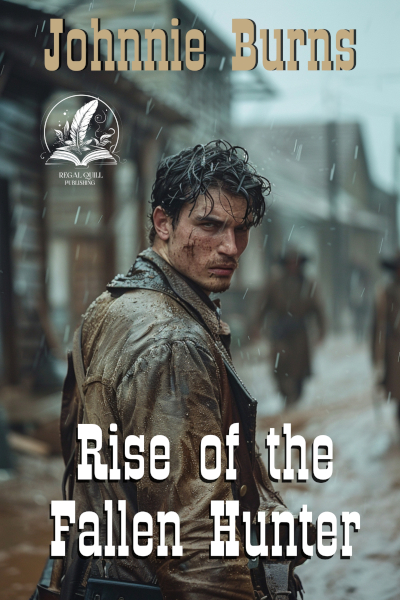
Prologue
St. Joseph, Missouri
1880
“What time is it?”
Pat Coleman reached for the gold watch dangling from his vest and consulted it.
“Ten after two.”
He was standing on a plush carpet in a private Pullman car, and the other man was a banker, luxuriously cushioned by a velvet seat. The elderly gent was resplendent in a tailored linen suit, top hat, silk tie, and brocade vest.
But the older man was nervous, and he had a right to be. “This train should’ve been out of the station fifteen minutes ago,” he complained. “What’s keeping them?”
Pat lit a cigar and sent a spiral of blue smoke toward the ornate ceiling. “Checking the track ahead, I expect,” he mumbled. “Don’t worry, Mr. Miles. Your gold shipment is as safe as the line can make it. This train’s crawling with security.”
The older man’s eyes flashed. “For what my bank is paying, that gold had better be secure!” he retorted, then frowned. “What would you know about it? Are you a lawman?”
Pat tilted the cigar up and smiled at him. “You could say that.”
“You look like one,” the other man observed. “Your hair is almost on your shoulders, and your mustache needs a trimming. You’re scruffy enough.”
Pat’s smile deepened. “I thought I was blending in. I’m dressing fancy to match the bankers on this train.”
“Oh.” Mr. Miles gave him a once-over. “I thought you were trying to look like Wild Bill Hickok! And you wouldn’t fool a banker even if you cut your hair. Your boots aren’t polished.”
Pat looked down at them. They were scuffed, sure enough, but he wasn’t trying to fool a banker. He was aiming to fool an owl hoot, and that bar was set a lot lower.
Still, one of the perks of working for yourself was that you didn’t have to take any guff, even from fat pickpockets like Thaddeus Miles. So Pat tilted his head to concede the point and drawled, “About as polished as your manners, you old buffalo.”
The rascal’s face went red in outrage, but Pat smiled, turned on the words, and walked out of the private car and into the vestibule. He scanned the station. Porters were still scuttling back and forth, but the station was otherwise deserted and roped off from the public.
It was two in the morning, and twenty thousand dollars in gold was sitting on the tracks, waiting to get shipped to Dallas.
Of course, the bank was taking every precaution to keep the shipment a secret from the public. But it was surprising how that kind of information always seemed to get to the wrong ears.
Twenty thousand dollars would be a hard temptation for some to resist. But he was thinking of one someone in particular.
Thomas Bell, the leader of the Crackerjacks gang. The Crackerjacks were brazen train robbers, and some were former miners, expert in the use of explosives. Their usual method was to stop a train and blow the doors off the baggage car.
If they tried to hit this train, it would be their most ambitious job yet. But Thomas Bell was plenty ambitious.
Pat glanced through the glass-paned door to the next car. It was full of scowling Pinkertons, every one of them lusting for Bell’s blood. They were running odds on when and where Bell was going to hit the train.
They all expected him to try, somewhere along the line.
Pat smiled and shook his head. The Pinkertons were career men, young guns looking to make a name for themselves as detectives. He was more pragmatic.
It was why he was a bounty hunter. He wasn’t after glory.
He was after money.
Thomas Bell had a five-thousand-dollar bounty on his head, offered by the First National Bank of Chicago, which Bell had robbed the year before. That was in addition to the two-thousand-dollar bounty offered by the smaller Bank of Kansas City, and the bounty of five hundred dollars offered by the Texas Banker’s Association.
As far as he was concerned, Bell was the real pot of gold.
And, he hoped, his last one. He’d been a bounty hunter for ten years. He was sick of shooting men, and sometimes getting shot himself. Bell had such a big price on his head that if he could get him, he could almost retire.
He bit his lip and stared at the station without seeing it. If he could just get that money, he’d buy a little store in the middle of nowhere where nothing ever happened. He’d settle down in luxurious sloth and let younger men go chasing after the outlaw scum of the earth.
His glance returned to the car full of Pinkertons, and he sighed and stepped down onto the platform. He walked the length of the train, scanning the porters’ faces, the vestibules, the roof of the train, even the undercarriage. The gang was unlikely to strike the station, but he couldn’t take that for granted.
He walked to the baggage car. It was dead center of the train and heavily padlocked, and there were ten guards inside loaded for bear. He walked past it and five other cars to the caboose, because that was where he was going to set up.
He wanted to see the whole length of the train stretching out in front of him. He climbed the steps and gripped the vestibule railing. It was a clear, cold night, with a full moon and the stars overhead as bright and sharp as diamonds on black velvet. He could see real well, and that was lucky.
He didn’t put much stock in feelings, but that night he felt like a man holding a full house with a big pot on the table.
He blew a lazy smoke ring into the air as the porters called to one another and began moving back from the cars. The engineer suddenly hit the whistle, and its hoarse, hollow wail shook the station and sent electricity up Pat’s spine. His eyes moved to the bobbing lanterns on the track ahead and saw fire belch from the smokestack as the ponderous wheels began to turn.
The car jerked, then jerked again, and the train started to move. Pat leaned against the railing and nursed his cigar as the station slowly slid past. It was about a week’s journey to California by train, and a lot could happen in that time. He watched as the lights of St. Joseph rolled by. At two in the morning, they were dim and low: a few porch lanterns, the occasional yellow glow in a bedroom window.
And the start of the journey was the safest leg of it, in his opinion. He had ten years of experience to back it up, and he turned into the caboose to bed down and grab some sleep. But he had two revolvers under his jacket, and he’d stowed a rifle and three shotguns in the caboose just in case. Because he was the train’s rear guard, and he took the responsibility seriously, even if it was the least likely place to get hit.
He tossed out his bedroll and sat down to stretch out on it. He set the revolvers on the floor by his right hand, then twitched a blanket up around his shoulders. The rocking of the car made him drowsy, and he was out before he knew it.
* * * * *
A sharp jerk and a screeching sound woke him abruptly. He looked up in momentary confusion, then grabbed for his guns and jumped up to open the car door.
It was deep night outside, and the train had skidded to a stop in the middle of the iron bridge over the Missouri River. As he watched, a shattering boom shook the far end of the bridge, followed by another one right behind the caboose.
The impact lifted the back end of the car, and Pat slammed to the ground as the bridge trembled.
He was stunned for a moment, then shook his hair out of his eyes and scrambled to his feet. When he yanked the door open, he was greeted by the crackle of heavy gunfire from the middle of the train. Bell and his men had chosen the river bridge as the choke point.
When Pat turned and leaned out to look, he saw the bridge behind them had been blown out, cutting off any help from the eastern shore. The boom from the front of the train had been the Crackerjacks hitting the gold car.
The train was trapped on a bridge to nowhere.
Pat grabbed his shotguns and jumped down from the train. He ran along the bridge walkway as fast as he dared. It was a dizzy catwalk fifty feet over the black surface of the river, and the lanterns on the girders didn’t provide near enough light.
Bullets spattered the iron beams over his head, and he threw himself down and yanked one of the shotguns up. There was a gaping hole in the side of the gold car, and bandits were pouring out in the moonlight.
Pat racked the shotgun and blasted them. Three were blown against the car and fell dead on the tracks, and the rest scrambled underneath the car and returned fire.
New gunfire erupted from farther up the train, and Pat glanced toward it. It was probably the Pinkertons, trying to work their way back. But that would mean the rest of the gang at the head of the train were dead or gone, and the two under the gold car were trapped between the detectives and… him.
Answering gunfire popped from the two trapped bandits, and Pat used the distraction to jump up and charge them. He threw the shotgun down and yanked his revolvers, and he was almost on them before they saw him.
There were two, a skinny young man and a fat older one lying under the train carriage. There were three simultaneous pops, something hissed past his ear, the boy doubled up screaming, and the older man flinched as a bullet struck fire off the car wheel.
Pat pointed his gun at the older man’s head and yelled, “I’ve got you! Put your hands up!”
The old man roared, “You go to hell! I’m not coming in alive. You want that reward money, you earn it with lead!”
His gun popped and flashed fire, something stung Pat’s cheek, and he pulled the trigger. The old man jerked backward with a bullet through his head, and the boy started screaming with a sharper note of agony in his voice.
“Pa!” he yelled. “Pa, Pa!” He whirled to shriek, “You killed him!”
Pat turned his gun on the young man and frowned as the boy’s face came into focus. He was pale, thin, with light eyes, a pinched nose, small teeth and a weak chin. His lanky hair fell down over his brow, and he reminded Pat of a trapped rat.
“Put your hands up, or I’ll drill you too!”
The Pinkertons came pelting down the bridge with their guns drawn and shouted, “You there under the car, come out with your hands up!”
The boy’s face twisted with hate. “I can’t, he shot my knee!” he screamed, then turned to spit at him.
“You bastard, you killed my pa and you’ve made me a cripple! I’m gonna kill you one day, you hear me? I’m gonna kill you if it’s the last thing I do!”
Pat gave him a quick once-over. Willy Bell couldn’t hold a light to his old man, and he’d just killed that rattlesnake.
“I’ll be waiting,” he drawled, and turned away in contempt.
The detectives poured in and dragged the boy out from under the car as he cursed them and screamed in pain. Pat reholstered his gun and straightened his jacket as they half-dragged, half-carried the boy away.
One of the remaining Pinkertons turned to him and slapped his arm. “Congratulations,” he said in a cheerful tone. “That was Thomas Bell and his son, Willy. You’re gonna get that reward money. You’re a rich man!”
Pat stared at him in surprise. That was true, but the heat of the gunfight had made him forget it. He stood still for a moment to let it sink in. He’d won such a big jackpot that it didn’t feel quite real. But the cold night air, the voices of the men on the bridge, and his own throbbing cheek were real enough.
He’d done it. He was going to get the money. The long, tough slog that had been his bounty hunting career was over at last. He was out of the lead business, and a slow smile spread over his face as he wiped the blood off his cheek and reached into his jacket for a cigar.
He’d faced his last desperado. It was time for a normal life at last, and a sudden rush of jubilation made him whoop like a kid in the cold night air.
Chapter One
Sunrise, Kansas
1885
Pat crossed his booted feet, and the leather creaked as he reached for his cigar case. “For the hundredth time,” he sighed, “that was all it was. It was over in less than five minutes. It wasn’t like the dime store novels. They make it sound like a bounty hunter is a fire-eater. Ten feet tall and bulletproof.”
He shook his head. He knew he had a reputation as a killer, and that shavetail boys and even some men thought he did it for fun. But that was ridiculous. There wasn’t a bounty hunter on earth who did it for fun.
They did it for money.
“I was scared witless the whole time,” he added wearily, “and so is every man who goes into a shootout, whether he’s done it before or not.”
His audience, his partner Ernest Nix, shook his head in smiling appreciation. Ernest was a local, a man who’d never traveled much outside of his hometown. He loved to hear the story of how Willy Bell got captured, and he never tired of hearing it, even if Pat had tired of telling it a long time ago.
Ernest shook his mop of curly black hair and grinned. “Aw, you can’t make me believe that.”
Pat glanced at his partner’s dark, eager eyes. “It’s true. I’d rather be a grocer than a bounty hunter any day.” He struck a match off his boot, lit a cigar, and blew a lazy ring of smoke to the ceiling of the room.
He meant every word of it. The Sunrise General Store was his place, or at least half his, and it was the closest thing to a real home he’d ever had. It suited him down to the ground.
He looked around at it. It was nice, it was clean, it was cozy. The right half of the room was groceries, and the left half was dry goods. The wooden building was dark and deep, its floors creaked, and its only light came from the front window and a few oil lanterns hanging from the ceiling. It provided him all the money he needed to live, and he was happy as a clam.
The best part was that nobody in that sleepy little farming town knew who he used to be, except for his business partner and the sheriff. He was content, except for times like now, when he was sorry that his partner knew about his past.
Pat glanced at the other man’s eager face and regretted that he’d spilled his secret. He’d been drunk at the time, but even so, it had been a mistake. Because Ernest was one of those men who read too many dime-store novels. He’d never been shot at in his life, but he was somehow under the impression that it was a great way to live. No bounty hunter ever born thought that.
Only armchair desperados like Ernest.
Ernest leaned forward in his chair with an expression of rapt attention and jerked his attention back to the subject at hand.
“But you didn’t crawfish out of the fight,” he replied quickly. “Not Pat Coleman, no sir! You faced down the biggest outlaw in Missouri! How did it feel to shoot him?”
Pat’s hand paused in the act of tossing the match away. He glanced at the other man’s excited eyes and frowned.
“Bad,” he replied softly. “That was how it felt. Just a little less bad than getting drilled myself, that’s all.” He shot his partner another glance. “Let’s talk about something else tonight, eh?”
Ernest shook his head and grimaced at the suggestion. He wadded up a stray receipt and tossed it into a trash can. “What else is there to talk about in this podunk town? The only exciting thing that ever happened was when the courthouse caught on fire, and even that was three years ago.”
Pat sputtered. “I don’t think a fire that might’ve burned my store is exciting.”
“You know what I mean.” Ernest bit his lip, then shot him another keen glance. “Why’d you give it up, anyway? They say bounty hunting’s real good money. Lots of excitement. Fame, even. Be honest, now. A young man like you? Bet it got you a lot of women, too.”
Pat adjusted one shoulder. He wasn’t going to discuss his love life with Ernest. He was in his mid-thirties, and he hadn’t had anything worthy to be called love until he’d met his wife. That had been love, for a little while. Until she died of pneumonia one winter.
“Bounty hunting was exciting, all right,” he sighed, “if that means never being sure of anything. Never being sure of a job, never being sure of the pay, never being sure if this day was gonna be my last.” He shook his head. “Looking over my shoulder even when I wasn’t working. It was life or death, every blasted day. Nothing in between. I was wound up all the time. That’s no way to live.”
He glanced at his friend and added, “I did it for the money. That’s all. When I got the money to buy this store, I quit.”
Pat took a deep pull of smoke, then slowly exhaled it. He glanced out through the store window at the street outside. Yeah, he loved the life he had now. He loved this sleepy little nowhere town where nothing exciting ever happened.
Early evening was his favorite time of day. Their little town was rolling up its sidewalks, twilight was falling over the sky, and the scent of dinner cooking filled the street. People were going home like birds settling in for the night.
It was a peaceful, cozy feeling, and after the life he’d led, he was ready for peaceful. He’d developed a real affection for the everyday things that Ernest thought were boring.
Pat inhaled smoke and rolled it in mouth. He’d been married for a little while, and the town kind of reminded him of that time in his life. Of the scent of evening and golden light in the window.
He glanced at his partner’s dark, curly mop of hair, his restless eyes. Ernest’s trouble was that he was a thrill seeker. It made him unhappy more often than not, because life wasn’t like that all the time unless you were an owl hoot and made your own excitement. And most of ’em got drilled in the end, or went to jail, so it was hard to see how they came out ahead.
Pat raised a bushy eyebrow. Yeah, he’d had plenty of chances to see how an exciting life ended up. Even Ernest knew better, though he didn’t want to admit it.
His friend looked up at him with a rueful expression. “Sometimes I wish I could do it, you know? That I was brave enough to take my life in my hands. They say it’s a crazy thrill when you think you might die.”
Pat shook his head. “That is crazy. And I don’t know what feeling you’re talking about,” he muttered. “Unless you’re talking about me getting my plow cleaned. That happened a lot.”
Ernest’s eyes were alight with disbelief and unholy glee. “Yes, you do know, you old fraud,” he replied softly. “You just don’t want to admit it was fun. That it was like… like a night with a wild woman or a jolt of whiskey!”
Pat hunched a shoulder. He wasn’t in the mood to walk down memory lane. “You’re talking like you’ve already had some whiskey tonight,” he drawled.
Ernest jumped up in exasperation and threw his hands in the air. “No, I haven’t, but it’s a good idea!” he retorted, and reached for his hat. “To have such a name for killing, you sure are a dull one!” he marveled. “I’m going down to the saloon and see if I can scare up something more exciting than watching you smoke.”
The little bell over the door jangled as he stomped out. Pat watched him go, then blew a perfect white ring and watched it slowly float to the ceiling and disappear.
Yeah, Ernest thought bounty hunting was all fun and games. He didn’t have the first clue what it really was. Pat set the cigar down and rubbed his arms. It was cold suddenly, and he got up and closed the door Ernest had left open.
Chapter Two
Pat finished his cigar, then rose to retire for the night in his apartment just above the store. He closed up the mercantile, locked the door, and flipped the little sign in it to read Closed. He did the same thing every night, and it brought him a strange comfort.
The Lord only knew, he wasn’t a sentimental man. But every night, just before he climbed the dark, narrow stairs to his rooms on the second floor, he took a little tour of the store. He told himself he was checking on inventory, but that was just what he called it. What he was really doing was reminding himself that he had a permanent home.
Savoring it like a fine cigar.
He circled the room, step by slow step, running his hand over the gleaming counter, strolling behind it to open the register. He unlocked the till, counted the money for the day, stuffed it into his pocket, and continued his review.
He reached up to pull a dried pepper off a bunch hanging from the ceiling, He closed his eyes to inhale the pleasant, earthy aroma, set it down on a barrel as he passed, and meandered to the back of the store, the far, dark wall that contained the stair to his apartments.
He unlocked the door and made his way up to his own rooms, and the wooden stairs groaned under his weight. He was a big man, more than six feet tall, and though his recent life was more sedate, he still had the muscles of a hunter who’d spent ten solid years on horseback, often living in the woods.
He unlocked another door and stepped into his private apartment. It was small, only a bedroom, sitting room, and tiny kitchen, but it was enough for him.
He closed and locked the door behind him. He probably didn’t need to do it, but the force of long habit was hard to break. He pulled a revolver out of his belt, where it had been hidden all day under his grocer’s apron, and set it on a table in the sitting room as he made his way to the kitchen.
He fired up a little kerosene camp stove he’d set up on the counter and slapped a steak into a cast-iron pan with a dollop of butter from the ice box. He’d always had to do for himself out on the trail, and he was a pretty fair hand to cook by now. He pulled a bottle of whiskey down from the cupboard, uncorked it, and poured himself a glass as he worked.
When he was finished, he carried his plate to his armchair in the sitting room, unfurled the Topeka newspaper, and settled in to have his dinner. A glaring headline caught his attention, and he read the breathless article underneath.
BELL GANG ROBS ANOTHER KANSAS BANK.
The infamous Willy Bell gang robbed the Farmer’s Bank in Atchison last Tuesday, killing three people, including the teller, and making away with five hundred dollars.
The bank was struck in the morning about an hour after the bank opened. Ten masked men entered and demanded the teller open the safe. When the young man refused, the gang shot him down, along with two customers at the counter at the time.
The gang blew the safe open with dynamite and fled the scene immediately.
Sheriff John Larkin organized a posse and gave chase to the bandits some time later, but by all reports the outlaws disappeared without a trace. It is thought that they are hiding somewhere in the countryside, perhaps in a cave or abandoned mine in the area.
The search is ongoing for the miscreants, and a large reward is being offered for Bell and his lieutenants.
Pat grunted and took a sip of whiskey. The mention of Willy Bell made his canines tingle. It looked like Willy had busted out of jail and was up to his old tricks. He shook his head.
Most of his old collars were still in jail, and would be until they died. And of them all, Willy was the one who most needed to rot behind bars.
He adjusted one shoulder uncomfortably. That kid was a nasty piece of work. Willy had had a name for being mean even before he’d caught him that night on the train. The rumor was that Willy had killed his own brother to keep him from taking over his pa’s gang. That was good news for the people of Kansas, but even so. He took another drink.
His memory showed him Willy’s face, pinched in pain and fury and spitting at him from underneath the train car.
You killed my pa and you’ve made me a cripple! I’m gonna kill you one day, you hear me? I’m gonna kill you if it’s the last thing I do!
Still, he’d heard those words from a lot of men over the years, and none of ’em had been able to make good on the threat. So he turned the page, took another sip of whiskey, and went on reading the paper.
Chapter Three
“Well, afternoon, Miz Grogan. What brings you by today?” The next morning, Pat wiped his flour-stained hands on the white apron he was wearing and looked at his customer with the best smile he had. Even though that smile was so slight it was mostly hidden under his mustache. But she didn’t seem to mind.
Bea Grogan was the prettiest woman in town, and he liked to talk to her because she reminded him of Lily. She had the same pretty blonde hair, the same sky-blue eyes, and the same sweet nature as his late wife. Of course, Bea wasn’t near as beautiful as Lily had been, but she came close enough to be a pleasant reminder.
“I’d like ten yards of that pretty green calico on the top shelf,” she replied, nodding to a row of shelves behind the store counter. “And five cards of matching buttons, and green thread.”
Pat glanced at her over his shoulder as he turned to get them. “Is there gonna be a party out to your place, Miz Grogan?”
She went a little pink and giggled. “Yes. Leon’s throwing me a surprise birthday party, and I’m making myself a new dress to be presentable. Did he tell you?”
Pat pulled down the bolt of cloth. “No, ma’am. Lucky guess.”
The young woman tilted her head and gave him a smiling but speculative look. “You always seem to guess right, Mr. Coleman. You must have the gift of prophecy.”
He shook his head. “Oh, I doubt that, ma’am. I just pay attention, is all.” He set the bolt, the buttons, and the spool of thread down on the counter. “How many yards do you need?”
“Eight, please. Oh, and some baking powder and sugar.” She giggled again. “We might need it. Leon’s bringing Mrs. Thomas over to bake my cake.” He turned to give her a quizzical look, and she added, “You’ve been here long enough to know how people talk in this town!”
“Yes, ma’am.” He nodded as he went to fetch the other things.
That was probably the thing he liked best about Sunrise. Nothing was ever a surprise in their little backwash, or at least, not for long. And after all the nasty surprises he’d had in his career, that felt real good.
He set all the items together on the counter and reached for a bag. “That’ll be a dollar twenty-five, Miz Grogan.”
She opened her bag and counted out the coins on the counter. “I think that’s exact.” She looked over her shoulder at the back of the room. “Where on earth has Ernest got to? I never see him helping you here at the store. Isn’t he supposed to be your partner?”
Pat shot her a quick look, then went back to bagging up her items. He didn’t want to say so, but she was right. He liked Ernest, but Ernest would lay out of work for days at a time. He was lazy as all fire, and it looked like the money he’d put up to buy half the store was going to be his last contribution to its success.
It would be awkward to admit that, though, so he only mumbled, “I expect he’ll be here in a little while.”
“Dinner time, you mean.”
The tart tone in her usually sweet voice reminded him of Lily. Lily couldn’t abide laziness, either. She certainly had never tolerated it in him. He smiled a bit, remembering how she’d rousted him out of bed one morning with a broom when he’d slept late.
Mrs. Grogan scooped up the paper bag. “Thank you, Mister Coleman.”
He nodded to her respectfully. “Happy birthday, ma’am.”
He watched her sway out of the store a bit wistfully. He’d come to terms with his grief. He was content now, but if there was one thing that would make his life perfect, it would be having Lily back. They’d only had a few years together, but the love between them had been strong enough to last him to his grave.
He was going to have to go to her, and he was prepared to.
The tinkling of the bell over the door made him look up. It was Ernest showing up for work at last, and he stuck a hand on his hip as his partner slipped in. Ernest looked unusually guilty about it, and Pat raised an eyebrow. It was well after one.
“Late night, Ernest?”
Ernest didn’t meet his eyes. “Sorry, Pat. I overslept.” He hurried to the back of the store with his shoulders hunched over, and he didn’t look toward the counter again.
Pat glanced at him, and glanced again. Ernest wasn’t the guilty type, so it was odd that he was acting like he felt that way. It probably had something to do with a woman. He shook his head and wiped the counter down.
He was sure he’d hear about it eventually. Most likely Ernest had spent the night with someone he shouldn’t have and was worried about it now that it was too late.
He shook his head again.
Chapter Four
Brraaannng.
The next morning, Pat’s alarm clock jumped off the bedside table. He groaned, rolled over, and slapped its metallic clanging into silence. He opened one eye and squinted at the window. Morning light was streaming through it, and when he glanced at the clock, it read six.
He pulled his hands over his face and lay there for a moment, then threw off the blanket and planted his bare feet on the chilly floorboards. When he leaned over the bed to the window and glanced down at the street, it was already stirring with other early risers.
It was a pleasant contrast to the dream he’d had during the night. He let the curtain fall and swung his legs over the side of the bed. Generally, his nerves were as cold and dull as a catfish lying on a river bottom. It took a lot to bother him. But every now and then, he had nightmares.
He saw the faces of the men he’d killed, twisted in pain, blood foaming from their mouths because he’d gut-shot them. They gaped at him, howled for his blood, told him he was gonna see ’em in hell. They told him all the ways they were gonna get even with him there.
Usually he put his nightmares down to eating too much too late at night, or getting hold of bad liquor. But this time, the reason was plain. It was that article about Willy Bell.
Well, he’d sent Willy’s old man to hell, and he’d send Willy, too, if he popped up again.
It was early summer, but it was still chilly of a morning, and he reached for his trousers and stepped into them as quick as he could. He walked to the washstand and splashed his face with the cold water, then picked his shaving brush out of the cracked tin cup and soaped his jaw.
He kept his chin smooth, but he still had the bushy mustache he’d always worn. He turned his face this way and that in front of the mirror. He was kind of proud of it.
If the long-haired look was good enough for Wild Bill, it was good enough for him.
He hummed as he soaped up his jaw and shaved. He’d been living in Sunrise for a little less than five years. It was his insurance policy against anybody who might want to hunt him up.
He’d chosen it because it was out in the middle of nowhere, buried at the center of twenty miles of corn fields. It had no stage or train depot and it was thirty miles from the nearest big town. Only two people in the place knew about his past, and he’d sworn them to silence.
That gave him a big advantage, because he knew everything about everybody in town, and about most folks outside of town. He knew every business in town, every farmhouse or ranch within miles, and the surrounding country pretty well.
Not that there was much to know. The whole area was as dull as week-old dishwater.
But he liked the hardworking farmers and shopkeepers who lived around him. They lived by a strict routine, and he found its sameness soothing. He’d adopted one of his own.
Every morning, he woke up, washed and shaved, and went down to Miss Effie’s café for breakfast. He ate and chewed the fat with the elderly woman for about fifteen minutes, then walked back to his store and got it ready to open.
He opened the store at eight and took his place behind the counter. Most days he had about ten customers, mostly middle-aged woman who kept him up to date with the latest gossip. Just enough sales to keep the place going with a little left over for cigars and the occasional fine toddy of an evening.
Most men would call his routine dull. Ernest certainly did. But he’d had enough bad excitement in his life to last him for the rest of it. He was sick of mortal danger and the constant suspense that came with it.
Peace and comfort and predictability were luxuries, and he found he liked them very much.
He stopped shaving for a minute to glance down at his bare chest. He had a half-dozen round, pink scars on it from where somebody had tried to kill him and failed. He had a few more streaking his neck that he tried to cover by keeping his hair shoulder-length.
He had a real collection, all right, but he expected it was complete. That was his plan, anyway. He was a retired gunman now.
Nobody was trying to cut his throat or give him a third eye. To his neighbors, he was the nice man at the mercantile who bagged up candy for their children and told them bland jokes as he weighed out flour.
In Sunrise he had near-complete privacy, and that was a luxury, too.
He picked up his brush, pulled it through his long brown hair, and reached for his jacket. He pulled up his galluses and shrugged into his coat before setting off for the café.
The sun was a red ball on a pink horizon, and the crisp morning air whetted his appetite for breakfast. He stepped off the sidewalk and launched out for the cafe across the street.
Its owner, Miss Effie, was a plump, pink-cheeked, white-haired old lady whose braids crowned her head like a diadem. She was pushing seventy and had to work because her husband died of cholera when she was forty. But she had a sunny temperament, she knew all the news in town, and she was the best cook in the county.
The perfume of sizzling bacon met him fifteen feet from the café door, and when he opened it, he saw the room was jam-packed with cowboy hats and broad shoulders. The customers were mostly working men like him, and Miss Effie nodded to him from the back as he walked in. She was bustling around a cast iron stove, and he saw three big skillets on top of it.
“Morning, Pat! What’ll you have?”
He smiled and shook his head. She always asked, even though she didn’t need to. He always ordered the same thing. “My usual.”
“Bacon, biscuits, and eggs, coming up.”
He slid into a window seat and gazed across the street through the steamed-up glass. One of his neighbors, a man named Bill, nodded to him.
“Morning, Pat! Where’s Ernest?”
“I don’t know, I haven’t seen him this morning.”
The other man elbowed his neighbor and grinned. “I saw him last night down to the saloon.” He laughed. “He was throwing money around to the girls and drunk as a bag of skunks. Bet he’s laying out this morning ’cause he’s hung over!”
Pat nodded. “You might be right. Ernest gets a wild hair now and then.”
The other man looked around, then leaned toward him to murmur, “Now and then? He lays out every day! Never figured what you saw in him, Pat. You’re the only one who works that store. Everybody in town knows it. Ol’ Ernest works the saloon and the cathouse. It’s your business, but if I was you, I’d find another partner. Somebody who’d do his share to run that place.”
Pat’s eyes moved to the mercantile. He liked Ernest, but Bill wasn’t wrong. Ernest was letting him do all the work of running their store. He was a no-show that morning, and there was no excuse for it. Ernest rented rooms two blocks down, so he didn’t even have far to walk.
It was opening time, and there was still no sign of him.
Miss Effie came bustling up with a coffee pot, and she set down a mug in front of him and filled it with steaming brew. Pat reached for it gratefully.
“Thanks, Miss Effie.”
The older woman pressed her wrinkled lips together in exasperation. “You need to marry a nice girl and get her to make breakfast for you,” she told him with a nod. “You’re well into your thirties. A man your age should be married!”
Pat cocked an eyebrow and mumbled, “Yes, ma’am.”
He took a sip of coffee as his neighbors hunched over their food and snickered. But that was Miss Effie. She was an old woman, and she’d earned the right to say whatever she pleased.
She came back a minute later and set a sizzling plate down in front of him, trailing steam, and he shook out his napkin in pleasant anticipation. There was nothing better than a hot, home-cooked breakfast on a chilly morning.
He turned his attention to his food, and his enjoyment of it kept him busy for a good ten minutes. He was mopping up egg yellows with a biscuit when he thought to glance out the window again.
People were starting to stir out in the street, and to his surprise, he didn’t recognize one of them. He blotted his lips with his napkin and stared at the stranger.
A familiar feeling crawled up his spine as he watched him. The newcomer was young and scruffy-looking, like he’d just come in from a hunting trip and had been living rough out in the woods. But he could see the man wasn’t a hunter. Or at least, he wasn’t hunting animals.
Pat’s eyes drifted down. The fellow’s hat was pulled low and his collar was turned up high, like he didn’t want to show his face. He had two revolvers on his hips, in spite of the fact that nobody went heeled in that sleepy town except the sheriff and his deputies. And Pat, on the sly.
There was no need.
He frowned at the stranger in growing concern. The man’s suspicious looks made him wish he had more than one gun in his belt, but his spare was lying on the table beside his bed, not hanging on his hip.
He glanced at the man again. He was hanging around the hitching post outside the mercantile, like he was waiting for somebody.
That young pistolero made him feel like he was getting sloppy. Still, he had no reason to suspect the fellow was there for him. He’d covered his tracks pretty well. Pat blotted his lips again, tossed a couple of greenbacks on the table, and went to find out who he was.
When he got out into the street, the man was leaning against a post outside the mercantile, smoking a cigar. He walked past the stranger and nodded to him over his shoulder. “The store’ll be open in a few minutes.”
The man didn’t answer, didn’t look at him. And when he put his hand on the knob, the door to the mercantile swung open without the need for his key.
Pat frowned as he walked in. He’d locked the place up tight when he left for breakfast, and he looked around for Ernest. He must’ve opened the store when he was eating his own breakfast, but it was strange that he hadn’t noticed. He scanned the shadowy recesses of the far wall.
“Ernest? You back there?”
He walked in, frowning. There was no sign of his partner in the dark store, but three more strangers were leaning on the counter, like they were waiting to be served. They were all wearing long dusters and they stunk of owl hoot and horse. Pat’s canines tingled.
He pulled down a hanging lantern and lit it. In the anemic glow he got a better look at his suspicious customers. They were turned away from him, but they had the greasy, unshaven look he knew all too well, and he walked toward the front counter. There was a sawed-off under it, and if he could reach the box of shells on the wall, he might be able to load it if he needed to.
“The store isn’t open yet, gents.”
The bell over the door jangled as it was pushed closed, and Pat frowned to see the pistolero had come inside. The man turned the lock and pulled the shades down.
“We’re not here to buy. We’re here to pay.”
One of the men at the counter turned around, and Pat felt the blood draining from his face. He knew that thin, grinning face, the crazy eyes, the wispy mustache, the tiny tobacco-stained teeth. But the last time he’d seen it, it had been twisted in hate.
It was Willy Bell, the man who’d once threatened to kill him.
“It’s been five years, Pat,” Willy drawled. “Remember me? ‘Cause I sure remember you, you son of a whore!”
Pat dropped his hands behind the counter and grabbed for the sawed-off, but the man at the door jerked his gun out of the holster and leveled it at him. “Put your hands up!” he shouted. “I’ll blow your head off!”
Pat dropped the shotgun and raised his hands, slow and easy. It looked like the end of the line for him, all of a sudden. Because the smiling, rat-faced man limping toward him was gloating like he was already dead.
“You never expected to see me again, did you?” the younger man asked in a mocking voice. “You thought you could just kill my pa and make me a cripple and still go on to collect your reward. Yeah, you thought you were set. You thought you were gonna live a nice, long life.”
He paused on the other side of the counter and tilted his head to one side. “You bought a nice little store in the back of beyond and thought no one would ever find you. Well, you were wrong, you stringy-haired, brush-faced bastard! I had to look a long time. But I finally ran you to ground.”
A shadow slowly appeared on the edge of the lamplight, and Pat frowned in dawning comprehension. It was Ernest, and Pat’s mouth twisted in fury. Yes, Ernest had been one of only two people in town who knew about his past. And Ernest had used that knowledge to sell him out to his enemies.
His partner looked a bit shamefaced and shrugged. “Sorry, Pat. But I’m not like you. I’m tired of watching the world go by. You’ve already had your fun. You’ve lived your life. I want one of my own. And that takes a lot more money than we’re making here.”
Willy nodded to the men standing at the counter, and they leaned over to drag him across by his collar. Pat twisted on his side and punched one man in the temple twice before he crumpled to the floor.
He pulled his feet up to his chest and kicked the other one in the ribs, and the man stumbled backwards, arms flailing.
Willy scowled and gestured to the others. “What are you standing around for? Get him!”
Two more men charged him, and Pat ducked a roundhouse punch, jabbed one man in the stomach and the other in the jaw, and was about to lunge over the counter for the shotgun when something hit him in the head. It felt like a frying pan. He staggered back as lights popped off in the air, and the next thing he knew, he was on the floor.
He wrapped his arms over his head as the thugs started to kick his back, his legs, his stomach. He curled up into a knot of agony as they kept stomping him.
He looked up just long enough to spit, “Ernest, you traitor!”
Ernest’s voice floated in the air from somewhere above his head. “Sorry, Pat,” it was saying. “It’s nothing personal, I swear.” He turned to Willy and asked, in a halfhearted tone, “Call them off, will you?”
Willy barked, “Get the key to his bank deposit box. I want the money he got for killing my pa. I don’t want to leave him a damn cent!”
Ernest turned to look down at him with an expression of pity. “Go on and give them the key, Pat,” he begged. “It’ll be easier on you.”
Pat glared up at him through his hair and roared, “Get it yourself, you damned snake! I’m not giving you a red cent. Just get it over with!”
Willy’s face twisted. His eyes widened and got a crazy look as he reached for his gun. He jerked it, pointed it at Pat’s knee, and pulled the trigger. The revolver went off with a loud pop.
“Arrgghh!”
Searing pain branched all through Pat’s body, and he screamed and curled into a ball of agony.
Willy yelled, “You give me that key or I’ll pop a cap in your other leg! I’ll blow your spine out and make you a talking head. I’ll put you in a chair for the rest of your life!”
Ernest’s nervous voice jumped up. “Calm down, Willy, I’ll search him! There’s no need to make this worse than it has to be.”
He knelt hastily and rummaged through Pat’s jacket as he writhed and moaned, and finally yanked the key out of an inner pocket. He grinned and held it up in triumph.
“There, you see, Willy? You got what you wanted.”
Pat opened an eye and moaned, “I’ll kill you both. I’ll hang you up by your guts!”
Willy took the key from Ernest. “Kill us? That’s sassy talk for a man who’s about to die.” He raised his gun to fire again, but then jerked his head to look as the front door suddenly burst open.
The newcomer yelped, “Sheriff’s coming, Willy! He’s got five deputies and they’re loaded down with iron!”
Ernest urged, “Let’s go, let’s go! Get out the back door, hurry!”
He turned on the words and rushed to the back of the store. The other bandits followed at a run, and a shattering crash followed as the front window was abruptly shot out. Glass sprayed the floor and the fleeing bandits returned fire through the gaping hole.
Pat was the only man in the store for about thirty seconds, but he barely registered his surroundings. The only thing that existed for him was red, volcanic pain.
He rolled onto his side, holding his shattered knee and groaning in agony. Somebody kicked the door in and armed deputies came pouring through the opening. They crashed to the back of the store and out through the back door, yelling commands.
But one man stayed behind. The sheriff glanced down, knelt beside him, and put his gun on the floor.
“Pat, hold on, I’m going for the doctor.”
Pat didn’t answer. He was doing well to breathe. The floor was red with his blood, the world was shaking with his pain, and the sound of the sheriff’s voice was fading away.
* * * * *
When the room came back again, the white-haired doctor was bending down over him. His voice was gentle. “Pat. Pat, wake up.”
He frowned and moaned, and the doctor told him, “Your knee’s been blown away. I can’t save your lower leg. I’m gonna have to take it off just above the cap.”
He moaned and turned his head, and the doctor urged, “Pat, did you hear me? I’m going to give you as much morphine as I can, but I’m going to have to take your lower leg. You’ll die of gangrene if I don’t.”
Pat frowned and shook his head. The only thought in his mind was no, but he forced himself to groan, “Do what you have to.”
The doctor’s voice was heavy with regret. “I’m sorry, Pat. But it has to be done. It’s going to hurt like hell. I’ll do what I can, I promise you that.” He raised a syringe to the light, and a second later something sharp pinched Pat’s upper leg, and the pain faded a bit.
The doctor turned to the other men who had appeared behind him. “Hold him down while I wash his leg.”
Big hands pressed down on his shoulders and chest, and something cold splashed across his knee, instantly setting it ablaze. He groaned and writhed as the doctor swabbed his knee with alcohol.
The doctor opened his black bag. “Put something in his mouth so he doesn’t bite his tongue off.”
Somebody shoved a big stick between his teeth, and the doctor lifted a gleaming surgical saw from his bag. He grunted, leaned into him hard, and put pressure on his leg.
The next thing he knew, a saw was cutting into his flesh, cutting him cruelly right to the bone, and finally, through it. Pat screamed and thrashed as searing pain pierced him, worse than anything he’d ever felt in his life.
“Arrghh! Oh, God help me!”
The doctor snapped, “Hold him still, blast you!”
The other men pressed down tight on his arms and legs, and he tossed his head helplessly as they tortured him. He shouted again, then suddenly convulsed, convulsed again, then abruptly lost consciousness.
He looked up and saw Lily leaning over him. Her face was as soft and beautiful and full of pity as a Madonna’s. Her eyes and her bright hair glowed with heavenly light. She put a soft hand on his chest and leaned in to kiss him, soft as a rose petal brushing his lips.
Lily gradually disappeared, and he woke with a cry, roused by a deep, gnawing pain in his leg. He moaned and focused on taking his next breath, because he was weak and sick and trembling all over.
The doctor’s soft voice told him, “It’s over now, Pat. I didn’t have room at my own house, so we put you in one of the beds on the upper floor of the saloon.”
He bent over suddenly and gasped, “Give me a can!”
The doctor handed him a trash can, and he threw up in it, then threw up again. He leaned weakly over the side of the bed, panting and drained.
The doctor’s voice was full of sympathy. “You took it like a man, Pat. You’re doing good.”
Pat opened his eyes. The walls of his garish bedroom were covered in red silk wallpaper, and tinny music was drifting up from below. Confusion swept him. For an instant he didn’t remember why he was there, but then his memory came flooding back.
He looked down at the blanket covering his legs. There was a space missing on one side below the knee, and he frowned in dawning comprehension.
“Oh,” he breathed, “now I remember.”
His face slowly twisted in fury as he saw Willy Bell’s gloating rat face leering at him over a revolver barrel. He flinched as he relived the explosion.
“It was Willy Bell that did this to me. And Ernest, blast him!” Hate surged in him, hate like a jet of fire roaring up from the center of the earth.
The doctor stood up in alarm. “Now calm down, Pat, you’re going to be all right. You just have to learn to adju—”
Pat sucked in air, then screamed at the top of the lungs. “I’ll kill ’em!” He shook his head and pulled his mouth down in fury. “I’ll kill them, I’ll kill ’em all!”
He threw off the blanket and tried to roll out of bed, and the doctor wrestled him back in. But he grabbed the older man’s shoulders and shoved him back, and the doctor fell against the wall with a crash and slid to the floor.
“Jack, Bob!” he yelled. “Help me, I can’t control him!”
Pat struggled up with all his strength. “I’ll kill ’em, I’ll kill ’em!”
The door burst open and two big men came running in. They wrestled him back into bed and held him down as he rolled his head on the pillow and howled.
OFFER: A BRAND NEW SERIES AND 2 FREEBIES FOR YOU!
Grab my new series, "Guns and Justice in the West", and get 2 FREE novels as a gift! Have a look here!
Hey, I hope you enjoyed this sneak peek of my new story! I look forward to your comments below.